Watch every Friday from 11:30 am to 1:00 pm as per schedule
Check with the centre for information, as the schedule is subject to change without notice (e.g., holidays).
Phone: 604-233-6225
Email: minorucentre@richmond.ca
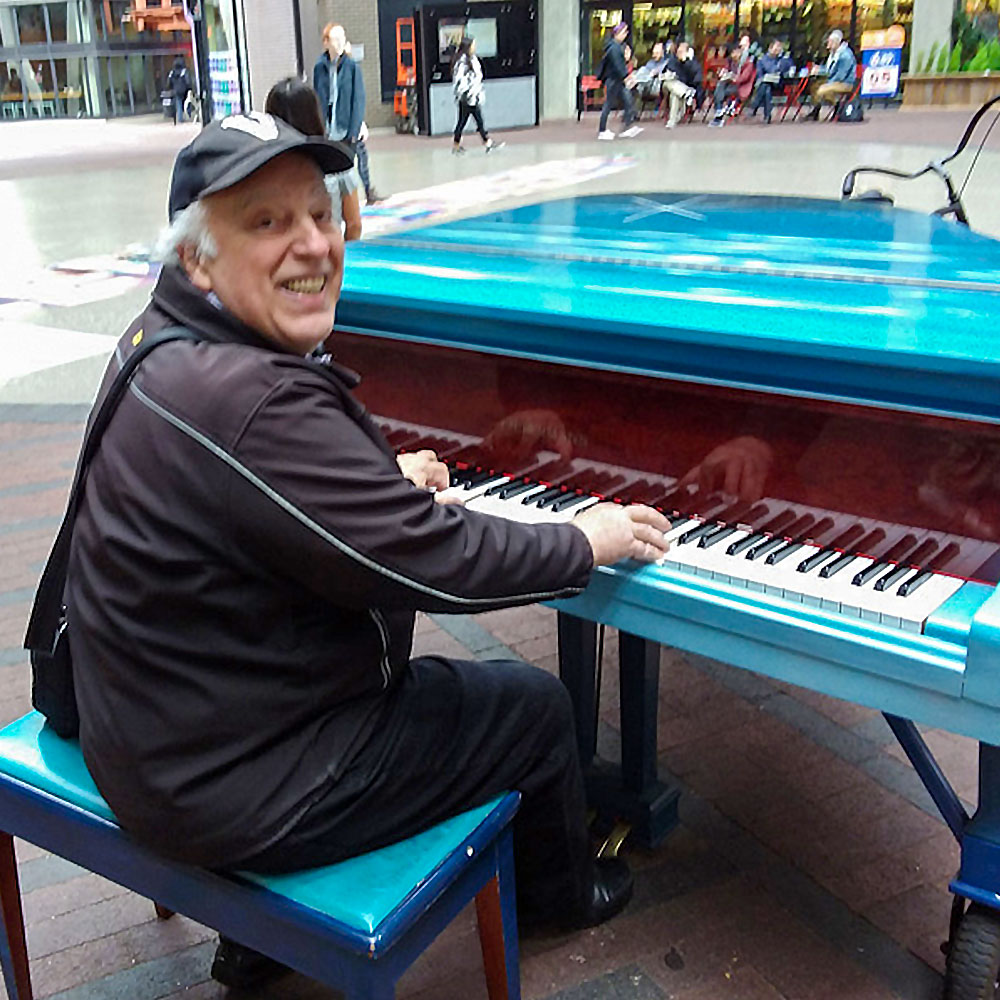
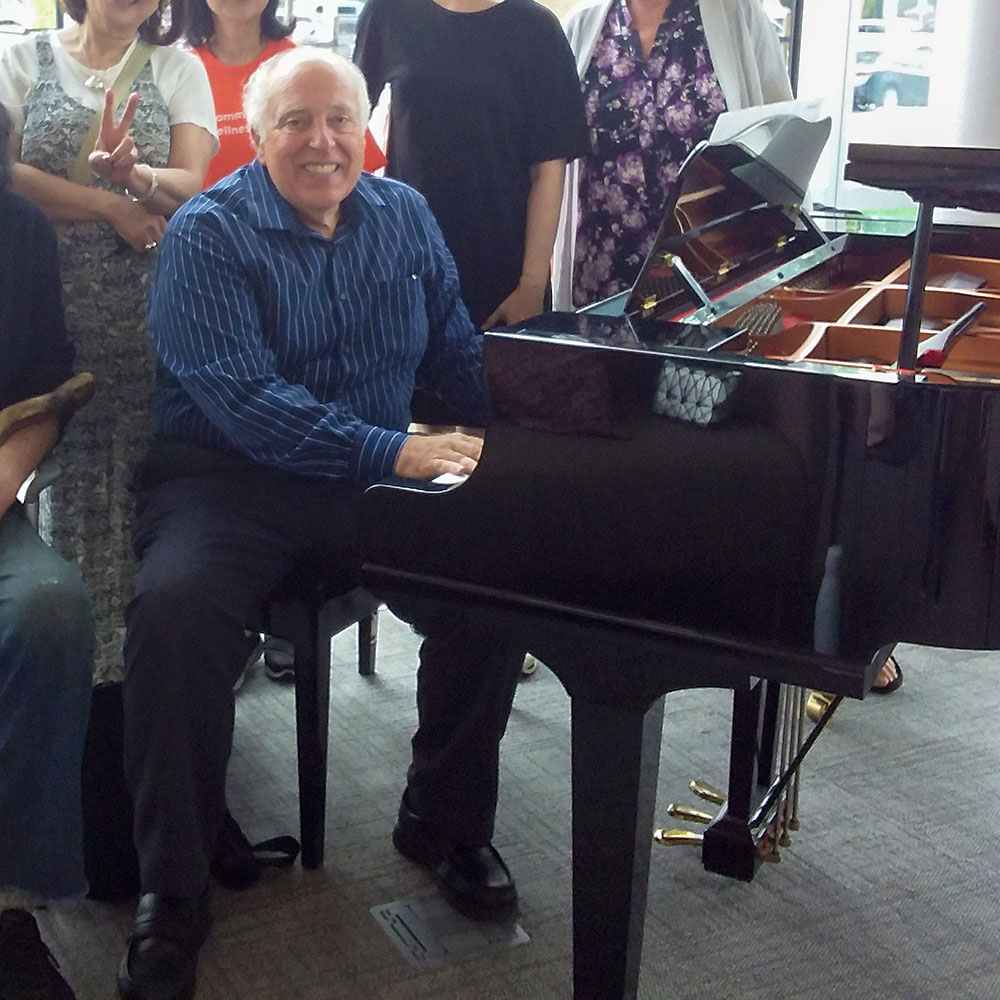
Good Morning Dennis,
I wanted to share with you that we have received lovely comments regarding your playing. I am very happy this is working out for you, and it has added a wonderful dimension to the centre.
Our patrons are enjoying your choices of music, and it sounds fantastic.
Thank you, and I appreciate your commitment to the music and to staying in touch.
Sonja Pickering | Community Facilities Coordinator
Community Services Division | Minoru Centre for Active Living
City of Richmond
Performances
May 2026 – Fireside Lounge, Minoru Centre for Active Living
Rachmaninoff Piano Performance
Portions from five of Rachmaninoff's compositions over his many years of active playing and composing.
+ View Full Program – Hide Program
Sergei Rachmaninoff produced 45 official Opus numbers, including symphonies, concertos, operas, preludes, and choral pieces, all world-renowned. He composed these while living in Russia, the USA, and on holiday. His active career started after his graduation from the Moscow Conservatory at the age of 19 in 1892, and continued almost until he died in 1943.
- Opus 3, No. 2, Prelude in C-sharp minor (1892). Also called "The Bells of Moscow." (ABRSM G8)
-
Opus 18,
Piano Concerto No. 2
(1900–1901)
- First Movement
- Second Movement
- Third Movement
-
Opus 30,
Piano Concerto No. 3
(1909)
- First Movement
- Second Movement
- Opus 32, No. 5, Prelude in G major (1910)
- Rhapsody on a Theme of Paganini, Variation No. 18 (1934). Variation 18 is one of Rachmaninoff's 24 variations in the Rhapsody. He was famous for his work with the variation form, composing major pieces based on themes by Chopin and Corelli, and famously performing Beethoven's 32 Variations in C minor. He also created renowned piano transcriptions of works by violinist Fritz Kreisler.
March 27, 2026 – Fireside Lounge, Minoru Centre for Active Living
Chopin Piano Performance
Portions from six of Chopin's compositions over his 30 years of active playing.
+ View Full Program – Hide Program
Frédéric François Chopin was a composer and pianist born in Poland in 1810 and died in France in 1849. He began composing at the age of seven, and in his 30 active years, he gave only 30 public performances across Poland, Vienna, and France. (See the Chopin Institute for more about his life and works.)
Chopin before the 1831 Revolution ended his time living in Poland
- Opus 10, No. 12, "Revolutionary Étude" (1831). Composed upon hearing news of the failed Polish revolution against Russia.
- Opus 9, No. 2, Nocturne (1831). Popular in Paris by 1833, Nocturne (meaning "night piece") was dedicated to Marie Pleyel, wife of piano manufacturer Camille Pleyel. He met them in 1831 and became a piano teacher to the wealthy.
Chopin after the Polish Revolution (1832) and romance with Maria Wodzińska (1835)
- Opus 10, No. 3, Étude (1832). Nicknamed "Tristesse" (meaning sadness) by others. The 12 Études of Op. 10 were dedicated to his friend Franz Liszt.
- Opus 69, No. 1, Waltz (1835). Nicknamed the "Farewell Waltz" by others, it was later given to his former fiancée, Maria. (Note: Performance will include the Opus 64, No. 2 ending.)
Chopin after meeting French writer George Sand in 1836 (relationship lasted until 1847)
- Opus 53, Polonaise in A-flat major (1842). Known as "Héroïque." Composed while in Nohant, France.
Chopin’s last two years in France until his 1849 death (producing no major works), and the posthumous publication of an unfinished 1830 composition
- Opus Posthumous, Nocturne No. 20 in C-sharp minor (1830). Published posthumously, this piece was featured in the film The Pianist.
Dennis and Previous Students on YouTube
Ella playing Ode to Joy (Beethoven)
Dennis playing melody combining Reverie portion by Debussy and The Swan by Saint-Saens
Ryan playing You Raise Me Up (Josh Groban)